
ART, WHATEVER IT TAKES
Since the early pandemic in 2020, Rome Art Program has conducted a series of interviews, “Art, Whatever It Takes.”
Artists, Art Critics, and Art Historians living in Italy, the U.S., and U.K., share their insights during these powerful times.
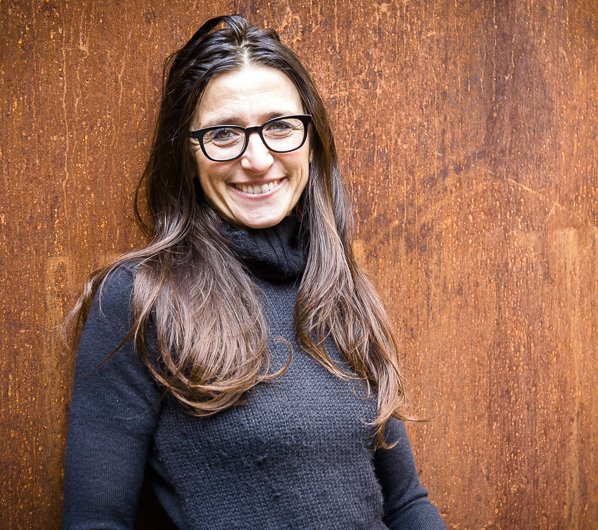
Interview with Anna Marra
The Galleria Anna Marra is active since 2013. Located in the ancient ‘Roman Jewish Ghetto’, its spaces are strongly characterized by minimal and contemporary architecture, which is reflected in the exhibition proposals, developed in collaboration with internationally curators, such as Larry Ossei-Mensah (Formerly Senior Curator of the Museum of Contemporary Art of Detroit), Alessandro Romanini (Co-Curator of the Ivory Coast Pavilion, at the 2022 Venice Biennale), and Silvia Cirelli (Artistic Director and Chief Curator of “Creative Emergencies”, Curator of the Woman Biennal at the City of Ravenna Museum of Art). The gallery’s activity focuses on the promotion of emerging and mid-career talents, showcasing them through exhibitions in its own space and in public institutions, as well as participation in international art fairs and the publication of monographs & catalogs. While maintaining a strong focus on Italian art, the gallery’s main goal is to present international artistic research. With this intent, in 2016, it started a series of exhibitions dedicated to American artists, followed by an extensive focus on artists from the ‘African Diaspora’. Over the years, the gallery has expanded its offerings by presenting artists from South America, Africa, and the Middle East, with the aim of fostering cultural exchange and enrichment. The overall vision is to focus on artistic expressions that address socio-cultural and geopolitical themes, such as the Black condition, and the status of women.
Rome Art Program: What is your definition of "art" today?
Anna Marra: Art today is no longer strictly defined by the medium, but by its capacity to generate 'meaning'. I would define art as a "thought device" that transforms individual experience into a collective reflection. It's that margin of freedom that allows us to look at reality through a non-conventional lens.
RAP: Art is dynamic and regenerates itself... How does it change and how did it change us?
Anna: Art changes because it absorbs political crises, technological revolutions, and social urgencies. It has changed us by making us more resilient and perceptive. It has taught us that there is no single truth, but rather infinite perspectives. Art educates us in visual empathy, allowing us to "inhabit" worlds different from our own.
RAP: What role does art play today?
Anna: Today, art plays a role of intellectual resistance. In a world dominated by speed and the immediate consumption of ephemeral images, art forces us to slow down. It functions as an "ethical compass" and a guardian of critical memory in a society that tends toward oblivion.
RAP: What would you recommend to an 'emerging artist' today?
Anna: The 'key' is to be obsessive and authentic. I would advise them not to chase trends, which are volatile by definition. The key is consistency. Studying the masters of the past is necessary in order to be able to 'betray' them with awareness.
RAP: How have new technologies and media culture changed art today?.. improving or worsening it?
Anna: Technology is a tool, not an end in itself. It has improved art by democratizing access and offering new expressive possibilities. However, the risk lies in the erosion of the attention span: "media culture" often pushes toward a superficial aesthetic, designed to be consumed in seconds. Art must know how to use technology without being used by it.
RAP: Understanding, interpreting, and then possibly judging the 'work of art'; what is the right path?
Anna: The right path is paved with silence and study. Before judging, one must look for a long time; judgment should always be the final stage. Interpretation requires knowledge of the artist’s context, but it must also leave room for personal emotional resonance.
RAP: What is the real role of academies and art schools today? What can artists learn from these institutions today?
Anna: Academies should be gymnasiums for discipline and dialogue. Beyond technique, an artist can learn critical method and the ability to situate their work within the history of art. Moreover, these institutions offer community: the dialogue among peers and professors is the first true testing ground for a young artist.
RAP: How do art galleries and museums position themselves today, and, in your opinion, how should they?
Anna: Today many institutions are working hard to balance public engagement with their cultural missions. However, I believe there is still a significant opportunity for museums to open up even more to experimental research. Rather than just being repositories of the past, they should function as active laboratories, where the dialogue between history and contemporary discovery is costantly renewed. As for galleries, we should position ourselves as the primary bridge in this process: our role is to act as scouts, identifying and nurturing the research that will eventually find its place within museum walls. The ideal positioning for both is a collaborative ecosystem, where the courage of the gallery and the scientific authority of the museum work together to support innovative artistic practices.
RAP: ...will art save us?
Anna: Art cannot save the world in a literal sense, but it certainly saves us from banality, indifference, and spiritual blindness. In that sense, yes: it is the only true lifeline we have.
@galleriaannamarra