
ART, WHATEVER IT TAKES
Since the early pandemic in 2020, Rome Art Program has conducted a series of interviews, “Art, Whatever It Takes.”
Artists, Art Critics, and Art Historians living in Italy, the U.S., and U.K., share their insights during these powerful times.
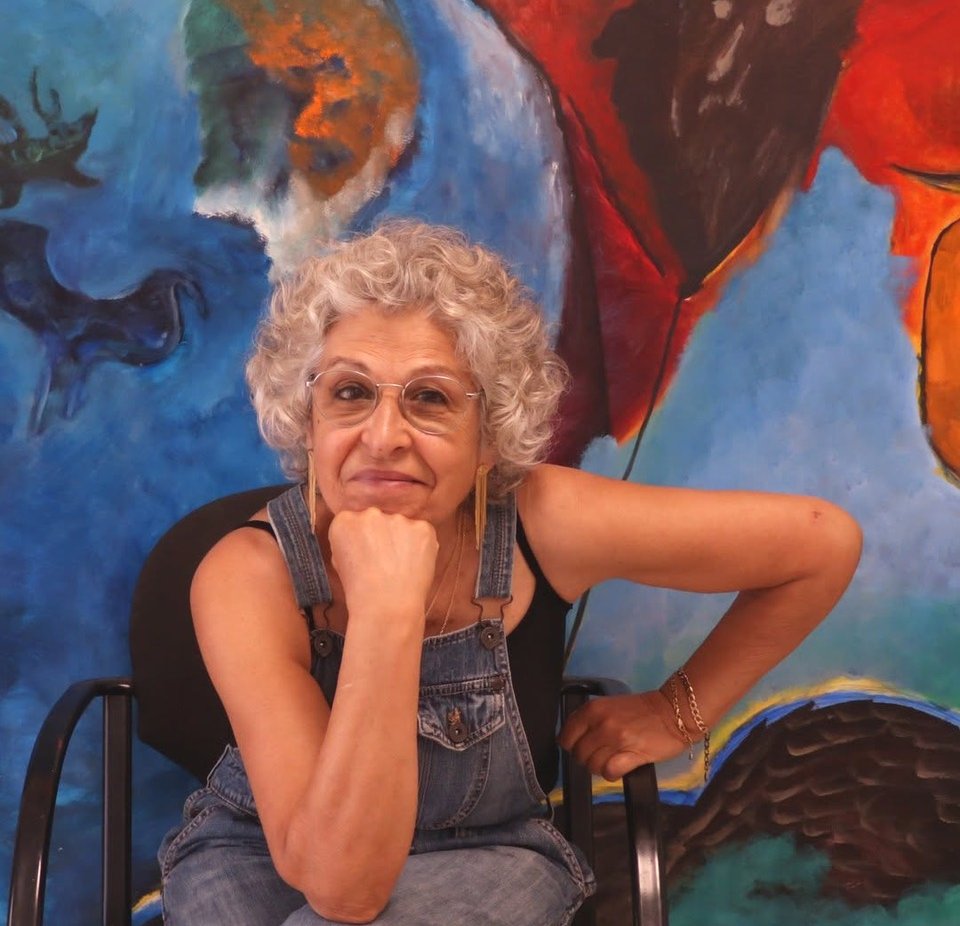
Interview with Eva Bosch
Eva Bosch is a Catalan painter based in London whose research-led practice explores prehistoric art, art history and material culture.
Educated at the Royal College of Art, London, and the Rijksakademie van Beeldende Kunsten, Amsterdam, she investigates human relationships, language and images from the unconscious through painting. Awarded a Pollock-Krasner Foundation Grant (1995), her work combines archaeological research with a strong engagement with the materiality of paint.
Bosch has undertaken residencies at Çatalhöyük and Aşıklı Höyük, Turkey, collaborating with excavation teams studying some of the world’s earliest settlements. These projects have informed paintings, installations, films and lectures on ancient pigments, architecture, ritual and symbolic systems. Research in Senegal, Taiwan and Spain further shapes her cross-cultural approach. She conceived the touring exhibition Kazi İzleri / Lines of Site, and her recent solo exhibition Shoes and Stars (2024) was presented at Benjamin Rhodes Arts, London.
Bosch has also lectured at Tate Modern, the National Gallery, Instituto Cervantes and universities across Europe and Latin America. Her lectures on artists such as Picasso and Miró reflect the same spirit of inquiry that informs her paintings, connecting contemporary practice with archaeology, history and the enduring language of images.
Rome Art Program: What is your definition of “art” today?
Eva Bosch: Definitions depend on the artist and their tradition. Since the internet became widely accessible in the 90s, mastery of a medium has become less central, and under the umbrella of “art,” almost anything goes. The positive side is that new traditions are emerging from a wider range of cultures and backgrounds. As a painter, I still believe in the tradition of Rembrandt, Pablo Picasso, and Philip Guston, and remain settled in that lineage.
RAP: Art is dynamic and regenerates itself... How does it change and how has it changed us?
Eva: At its core, art never changes. The bulls of Altamira carry the same force as Picasso’s Guernica. Styles and tools evolve because humanity evolves. Each generation inherits symbols and stories, reshaping them for its time. Art changes us by expanding how we see and reminding us there are things greater than our vulnerability.
RAP: What role does art play today?
Eva: In a culture driven by speed and utility, art creates space for reflection and imagination. Its role has remained the same. What is unique now is that almost everyone can claim to be an artist. We are living through an unprecedented creative explosion, and though its outcome is unclear, I believe remarkable things will emerge. Art may look different in the future, but it will remain essential.
RAP: What would you recommend to an emerging artist today?
Eva: Start in the life room. Drawing the human body remains one of the best ways to train the eye and understand how we see. Light and shadow are the same as they have always been. Ignore trends and don’t chase originality—it comes through curiosity, observation, and honest work. Be patient. A real artistic voice takes years of practice, persistence, and failure to develop.
RAP: How have new technologies & media culture changed art today?
Eva: Technology has opened access to tools, audiences, and new forms of expression, allowing more people to create and share work than ever before. But media culture is double-edged: social media often values visibility over depth and speed over reflection. Technology is a great tool, but if it takes over, it risks destroying the thought and human connection that give art meaning.
RAP: Understanding, interpreting, and judging a work of art—what is the right approach?
Eva: As my friend Ken Kiff said, “A work of art has to be alive.” It is not first about understanding. Ways of seeing change because we change. If a work is alive, it will gradually reveal itself. Interpretation and judgment come later. The first encounter is simply whether the work engages you.
RAP: What is the real role of academies and art schools today?
Eva: Their role has always been to pass on knowledge and challenge students to think, struggle, and discover their own forms of expression. But today grants and scholarships have been greatly reduced. Survival has become the priority for many institutions, and students often pay the price.
RAP: How do art galleries and museums position themselves today?
Eva: Their responsibility is to balance accessibility with depth: welcoming broad audiences while preserving space for difficult and experimental work. Their role is not only to reflect culture but question it. Social media has become an effective tool for publicity, and visitor numbers seem to be growing. In the end, everything depends on leadership—if those running these institutions are knowledgeable and curious, the rest will follow.
RAP: …will art save us?
Eva: Art, as an active agent, will not save us. But the willingness to make it gives human beings the capacity to develop empathy, imagination, curiosity, and a deeper experience of emotion. In other words, it helps us remain human.
@art_evabosch