
ART, WHATEVER IT TAKES

Since the early pandemic in 2020, Rome Art Program has conducted a series of interviews, “Art, Whatever It Takes.”
Artists, Art Critics, and Art Historians living in Italy, the U.S., and U.K., share their insights during these powerful times.
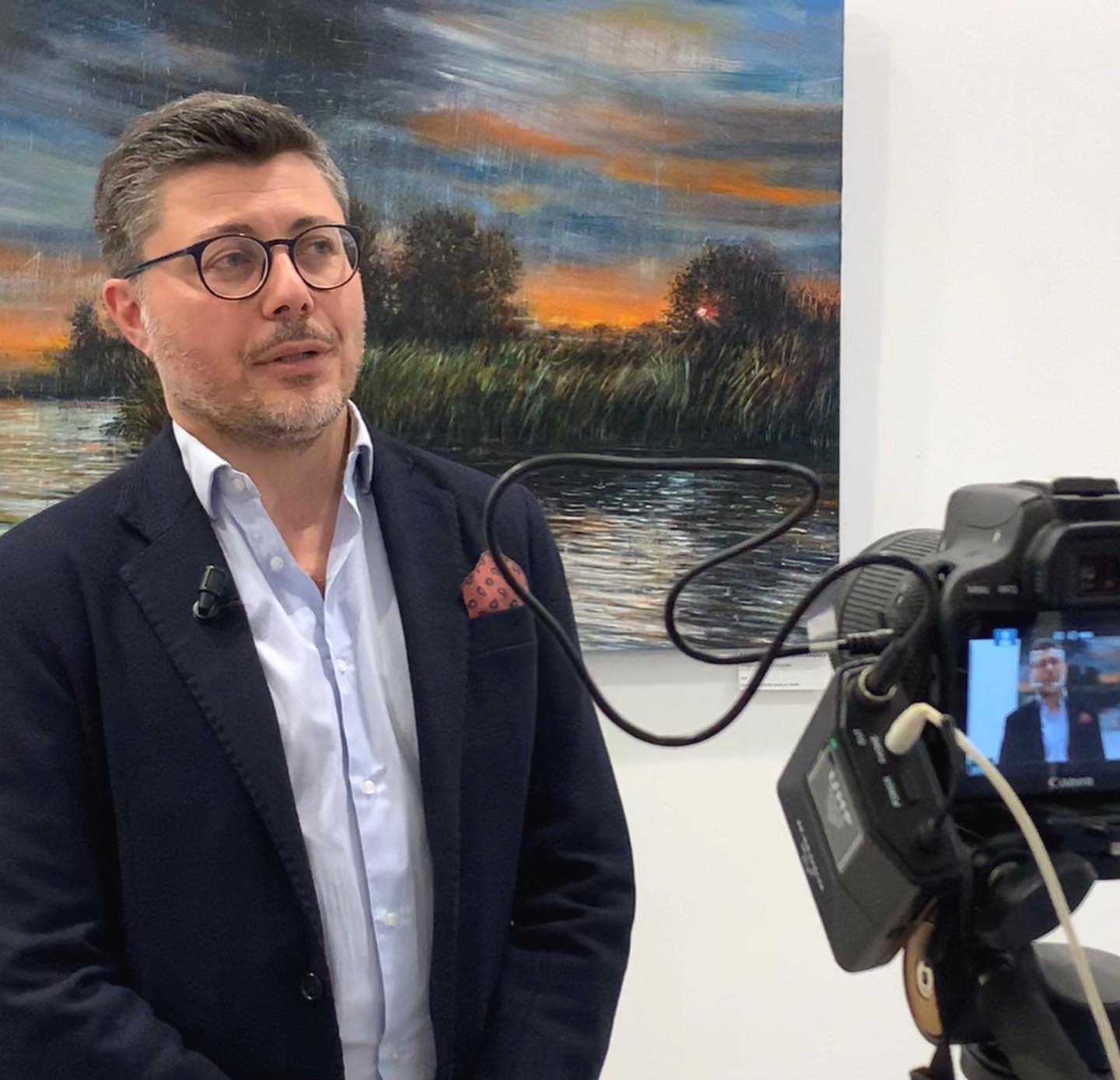
Interview with Francesco Ciaffi

 Francesco Ciaffi (Rome, 1977) graduated from high school with a degree in classical studies and law.   He has been working alongside his father Gianfranco in the management of the Edarcom Europa Gallery since 2005, and assumed sole management in 2021.  While continuing to showcase the masters of the gallery’s historic catalogue, he places particular emphasis on artists with traditional backgrounds who are engaged in serious contemporary research.    To mark the gallery’s 50th anniversary, celebrated in 2024, he is curating an exhibition programme that connects the past and the future, comprising exhibitions in the gallery’s spaces and participating in trade fairs.

RomeArtProgram: What is your definition of “art” today?

Francesco Ciaffi: In a historical moment in which the word "art" is often associated with all sorts of fields, I imagine my personal definition of "art" is a private human dimension of spontaneous and necessary creation, the fruit of which, consciously or unconsciously, is enjoyed by the entire community. The invention of something in the freest form, seemingly detached from the contemporary concept of utility, is perhaps the most ancient and visceral characteristic of humanity.

RAP: Art is dynamic and regenerates itself... How does it change and how has it changed us?

Francesco: Art is a language and connects with its surroundings, absorbing influences that stimulate continuous change. The result of this regeneration is a perspective on something that is happening or has happened, or an anticipation of something that does not yet exist, or the invention of something that will probably never exist; in any case, contact with art is fundamental for the growth of our sensitivity.

RAP: What role does art play today?

Francesco: Growing up in a gallery, absorbing its atmosphere and dynamics from an early age, certainly played a key role in my choice of career. In my myriad childhood memories, the gallery is a workplace that blends seamlessly with my home. Accompanying my father to the studios of the artists he collaborated with, watching him set up exhibitions, or sensitively guiding clients in choosing a works of art, all contributed to my strong connection to art and the vision it conveys.

RAP: What would you recommend to an ‘emerging artist’ today?

Francesco: In a world where the development of modern technologies is constantly employed to disseminate so-called relative truths, I believe that art, in all its honest and direct expressions, is the only thing capable of reminding humanity of the importance of keeping our sensibilities alive through critical and in-depth study of what surrounds us.

RAP: How have new technologies & media culture changed art today?.. made it better or worse? ...challenges?

Francesco: Of course, they exist, and I say this with conviction. Their appearance and way of interacting may have changed, and they're often even "unaware" of their role, but there are many active people, regardless of age, income, and educational background, who follow the contemporary art scene with great interest and support its growth.

RAP: Understanding, interpreting, and then possibly judging a work of art; which is the right way to approach a work of art?

Francesco: For a long time, information and interaction between art world professionals and the public have been clear and well-defined methods and times. The advent of the internet, and even more so social media, has obviously led to a revolution throughout the entire sector, and today online presence is as important as traditional activity. The speed at which everything happens may have negatively impacted the quality of some content and led to a sort of visual pollution, but the great advantage of expanding the audience beyond physical boundaries remains intact. The greatest challenge, which is always linked to technological development, is to ensure that the work remains connected to human intelligence.

RAP: What is the real role of academies and art schools today? What can artists learn from them today?

Francesco: Art academies and schools play a crucial role in supporting those already inclined towards artistic creation by providing training and theoretical and practical knowledge of various techniques. Dedicating one's life to art undoubtedly requires an initial sacrifice, which is difficult to undertake unless one is naturally talented.

RAP: How do art galleries and museums position themselves today, and, in your opinion, how should they?

Francesco: The bond between these two entities, once close, has frayed over time. Today they appear to be places and activities with a contiguous path, but, with a few exceptions, they never come into contact. The fear of making mistakes translates into a limitation of independence, which ultimately confines those who direct museums and curate their collections to an exclusive focus on artistic entities that have already been 'blessed' by larger institutions. This creates a lack of attention for the activities of galleries, which are relegated, almost "derogatorily," to mere places of commerce. My hope is that galleries and museums, especially contemporary ones, will once again communicate with each other.

RAP: ...will art save us?

Francesco: Always! History teaches us. Every era of the past is primarily remembered as bright or dark period based on its artistic legacy. But art is a human product and will be able to save us only if we all recognize it, and restore to it the dignity and importance it deserves...

@galleriaedarcom