
ART, WHATEVER IT TAKES

Since the early pandemic in 2020, Rome Art Program has conducted a series of interviews, “Art, Whatever It Takes.”
Artists, Art Critics, and Art Historians living in Italy, the U.S., and U.K., share their insights during these powerful times.
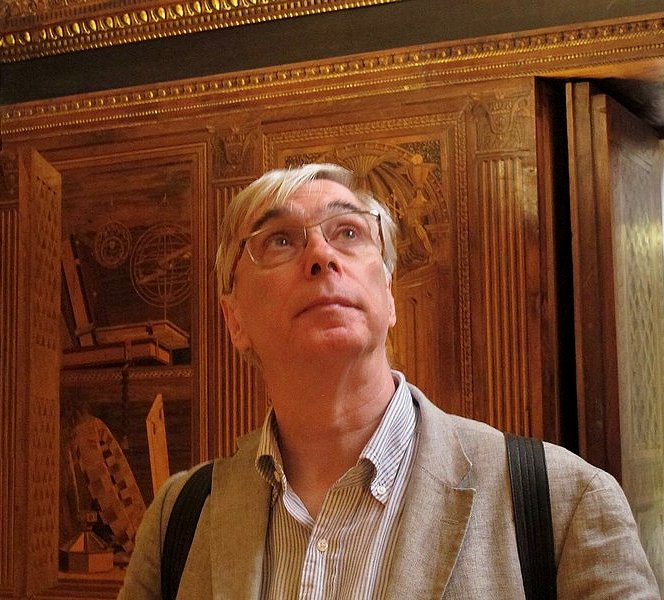
Interview with Mark Evans

Mark Evans studied History and Art History at the University of London (BA 1975) and the University of East Anglia (PhD 1983).  His interest in art was kindled as a child in 1962 by visits to the National Gallery and Bridget Riley’s first exhibition at Gallery One in London. He has held posts at the British Library Department of manuscripts (London), the University of St. Andrews (Scotland), the Walker Art Gallery (Liverpool), the National Museum of Wales (Cardiff) and in 2000 was appointed Senior Curator of Paintings at the Victoria and Albert Museum (V&A, London).   His interests extend from Renaissance painting and illumination to John Constable, as well as traditional African art and the history of museums and collecting.  The author of numerous books, catalogues and essays, he has curated major exhibitions on Raphael (2010), Constable (2014) and Botticelli (2016). Since 2021 he has been an Honorary Senior Research fellow at the V&A. 

RomeArtProgram: What is your definition of "art" today?

Mark Evans: A commodity that provides a way of making sense of human experience and the World.

RAP: Art is dynamic and regenerates itself... How does it change and how did it change us?

Mark: Art changes spasmodically under the influence of social and cultural shifts. It changes us by affecting our emotions and thought processes. It enhances our sense of wellbeing.

RAP: What role does art play today?

Mark: It stimulates critical thought and connects people through time as well as space.

RAP: What would you recommend to an 'emerging artist' today?

Mark: Authenticity is everything. Consult the best past models & seek to develop a unique style and content.

RAP: How have new technologies & media culture changed art today?.. improving or worsening it? ...challenges?

Mark: It’s too early to tell, but they pose the danger of becoming a substitute for ‘the real thing’.

RAP: Understanding, interpreting, and then possibly judging the 'work of art'; what is the right path when confronted with a work of art?

Mark: Don’t rush to judgement. Silence is as eloquent as noise. Look slowly and try to imagine the purpose of a work of art and the circumstances of its creation.

RAP: What is the real role of Academies and Art schools today? What can artists learn from these institutions today?

Mark: Academies of art have been challenged since the rise of the avant garde, but the notion that ‘great art’ is the preserve of outsiders is a myth, as it is inherently a social activity that is all about communication. The team worker Raphael was as great an artist as the loner Michelangelo, and a more influential one. Academies ought to provide a social space for interaction, the development of ideas and induction into the serious business of art.

RAP: How do Art Galleries and Museums position themselves today, and, in your opinion, how should they?

Mark: Their role is to inform and inspire, and to act as agents of social change. They have a three-fold duty; to the past and the future, as well as the present. These essential roles can be imperilled by fashion and excessive concern for income generation.

RAP: Will Art save us?

Mark: It has saved me twice.