
ART, WHATEVER IT TAKES
Since the early pandemic in 2020, Rome Art Program has conducted a series of interviews, “Art, Whatever It Takes.”
Artists, Art Critics, and Art Historians living in Italy, the U.S., and U.K., share their insights during these powerful times.
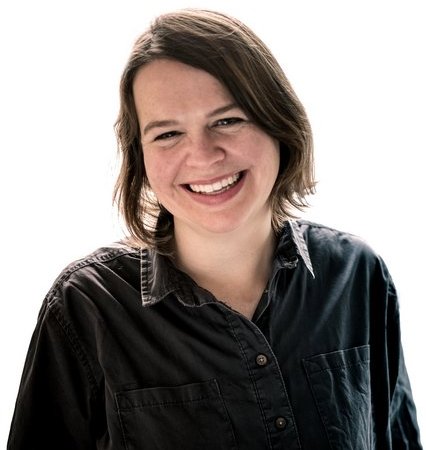
Interview with Florence Hallett
Florence Hallett is a critic and art journalist living in London. She writes regularly for The New World, (formerly The New European), The I Paper, and The Art Newspaper, and has contributed to Plaster, The Telegraph, Apollo, and more. She read History of Art and Material Studies and University College London, where she went on to take an MA in Late Medieval Death Culture, focusing on instances of the Dance of Death in medieval England. She began her career in illustrated books publishing, and has maintained an interest in artist and photo books, as well as special interests in conservation, photography, 20th century modernism, and the art of the late middle ages and early Renaissance.
RomeArtProgram: What is your definition of "art" today?
Florence Hallett: Art belongs to the realm of the imagination, it’s this that makes it the most powerful means for us to explore and experience realities and unrealities that are not our own. Good art will haunt your consciousness forever – you are never quite the same again afterwards.
RAP: Art is dynamic and regenerates itself... How does it change and how has it changed us?
Florence: No two people will perceive it in quite the same way, and that difference between individuals gets magnified across time and cultural difference. Even so, to me the most beguiling thought is often what perceptions and responses we might share with a viewer from decades or centuries before.
RAP: What role does art play today?
Florence: I think in Britain, and probably the west generally, the main function of art at this moment is to make money.
RAP: What would you recommend to an 'emerging artist' today?
Florence: I wish artists weren’t required to bog themselves down in explaining their work. My suggestion is to seek advice from people who have your best interests at heart; listen, but never lose sight of your own vision. Having said all of that, you have to pay the bills, and there’s no shame in doing what needs to be done to keep the wolf from the door.
RAP: How have new technologies & media culture changed art today? ...made it better or worse? ...challenges?
Florence: AI and digital technologies have given artists a whole new toolbox to work with – that’s always exciting. More broadly, the decline of art criticism and the rise of social media means that artists are probably subjected to more scrutiny than ever, but not necessarily in a constructive or informed way. But also I know that some artists love being able to chat and share work online.
RAP: Understanding, interpreting, and then possibly judging a work of art; which is the right way to approach a work of art?
Florence: It’s all of those things, and none of them. You can’t judge in a meaningful way unless you’ve made an effort to understand and interpret. If your efforts leave you none the wiser you might reasonably judge the work to be wanting. But some of the best art is entirely elusive. You could spend a lifetime looking at Titian’s Death of Actaeon in the National Gallery. I don’t expect to ever think - right, I’ve cracked it. Anyway, everyone is free to look as they please. One tip I have is to look at the materials, it can be a way in.
RAP: What is the real role of academies and art schools today? What can artists learn from them today?
Florence: They are amazing hubs of energy, inspiration and wisdom – the grit in the oyster that make the pearl. Being challenged and tested by your peers and your tutors is essential if you’re going to get better, but so is friendship, support and the sheer creativity that makes art schools buzz.
RAP: How do art Galleries and museums position themselves today, and, in your opinion, how should they?
Florence: In the UK our wonderful museums and galleries are required to prove their worth by functioning as effective economic units. I believe that as in some other European cities, galleries and museums should just exist, for people to wander in and out of – they shouldn’t need to justify themselves with performance stats.
RAP: ...will art save us?
Florence: Art isn’t magic, it can’t undo or compensate for all the ills and horrors in the world. But it really can make things better. And it can bring people together, prompt thought and discussion, foster understanding. Perhaps most importantly, it is a place of escape. In that sense perhaps it saves people every day - myself included.
@florencehallett